Peeling Line Bottlenecks in Shrimp Processing Plants
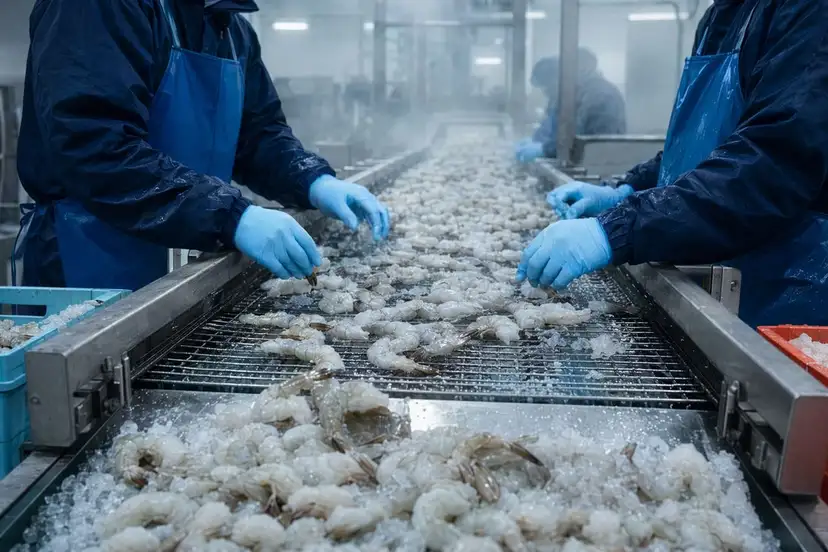
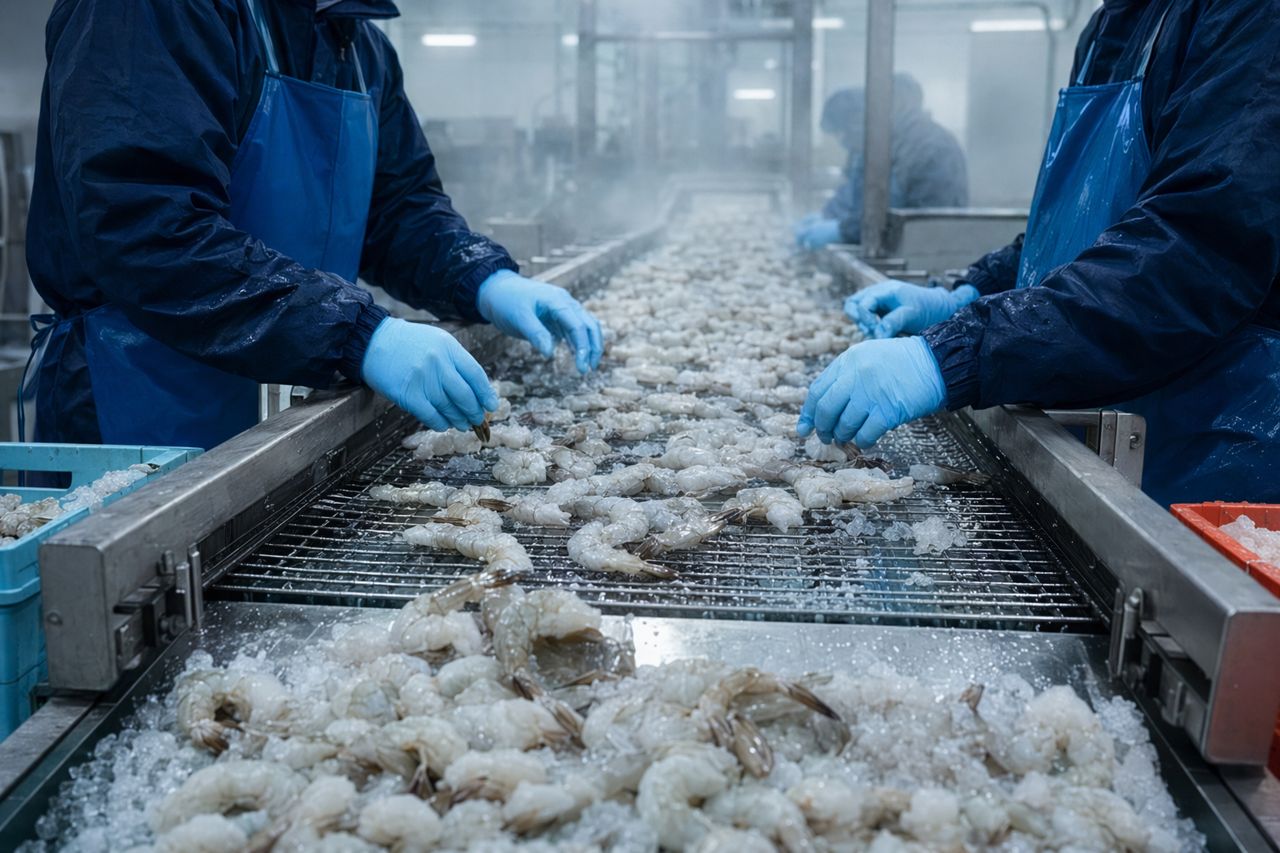
Shrimp peeling lines do not usually lose capacity at one obvious point. The slowdown builds across raw material variation, cold-room handling, machine adjustment, labor availability, dwell time control, rework, and packing flow.
For a cold-chain seafood processing plant, the goal is direct: keep product moving, protect peeled yield, reduce shell-on rejects, and avoid damage that lowers grade or creates downstream sorting pressure.
Shellshift Marine supports processors looking for an enzyme supplier for shrimp peeling and seafood processing with application-focused enzyme solutions designed around plant-floor constraints: temperature control, consistent shell-release, manageable dwell windows, and integration with existing processing flow.
Where peeling lines typically lose throughput
1. Raw material size variation
Mixed shrimp sizing creates uneven peel response. Smaller shrimp can over-process while larger shrimp remain harder to peel. This forces operators to slow the line, increase manual correction, or accept inconsistent output.
Operational impact:
- More hand trimming and rework
- Higher variation in peel quality
- Greater pressure on graders and pack-out teams
- More frequent machine setting changes
A controlled enzyme step can help narrow the gap between size groups by improving shell-release before mechanical peeling or manual finishing.
2. Cold-chain interruptions before peeling
Temperature drift before the peeling step affects texture, shell attachment, and line predictability. Product that warms unevenly can behave differently in the peeler, even when the machine settings are unchanged.
Plant managers should watch for:
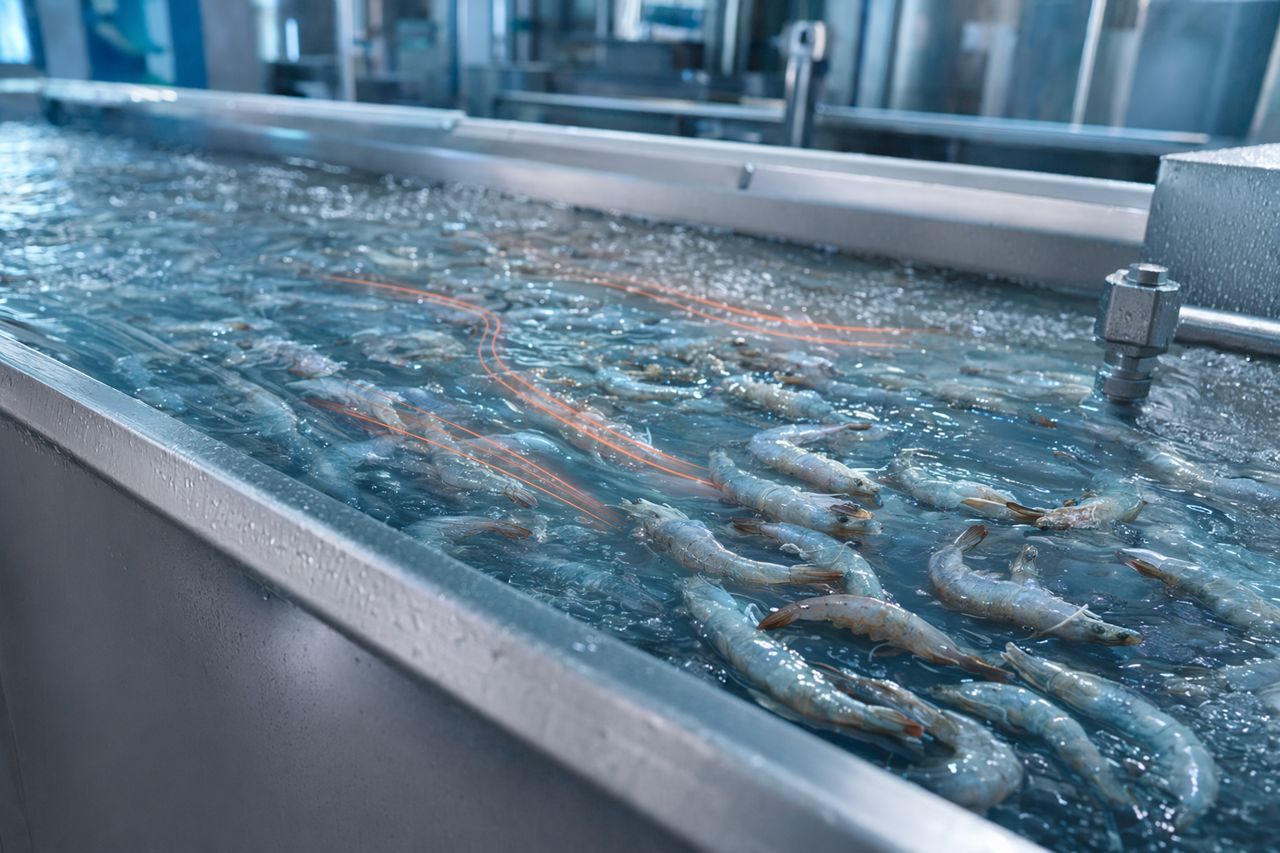
- Staging delays between thawing, brining, and peeling
- Overloaded tubs or uneven circulation
- Product waiting during labor gaps
- Inconsistent transfer timing from one shift to the next
In enzyme-assisted processes, cold-chain discipline matters. The right solution must work with the plant’s actual temperature window rather than forcing a fragile, lab-style condition onto the production floor.
3. Mechanical settings doing too much work
When shell-release is inconsistent, plants often compensate with more aggressive mechanical action. That can raise apparent throughput for a short run, but it often shows up later as broken meat, surface damage, higher drip, and more downgrade risk.
Common warning signs include:
- Increased fragmented pieces after peeling
- Tail damage or uneven appearance
- Excessive shell carryover into inspection
- More frequent stoppages for cleanout
- Operators making repeated micro-adjustments
The better approach is to reduce the force required for peeling, not simply increase the force applied.
4. Dwell time variability
Dwell time is one of the most common hidden bottlenecks. If shrimp move too quickly through the preparation step, shell-release may be incomplete. If they wait too long, the line can lose predictability and scheduling control.
A production-ready enzyme program should help operators run a practical dwell window that fits the plant’s shift rhythm, tub capacity, conveyor layout, and pack-out schedule.
The downstream cost of poor peel consistency
Peeling is not an isolated operation. Any instability moves downstream.
When peel quality varies, packing teams see:
- More inspection labor per finished lot
- Slower grading decisions
- Increased rework accumulation
- Pack weight variability
- Higher risk of late orders during peak production
When mechanical damage rises, commercial teams see:
- Lower finished-grade recovery
- More downgraded product
- Less predictable yield by raw material lot
- Customer complaints tied to appearance or texture
The processor pays for the bottleneck twice: once in lost line speed, and again in finished product value.
How enzyme-assisted peeling supports line balance
An enzyme solution is not a substitute for good plant control. It works best when integrated into a disciplined process with clear handling, timing, and temperature management.
The operational value is straightforward:
- Easier shell-release before mechanical peeling
- Reduced dependence on aggressive machine settings
- More consistent peel quality across incoming lots
- Less hand correction at inspection tables
- Better protection of edible meat during processing
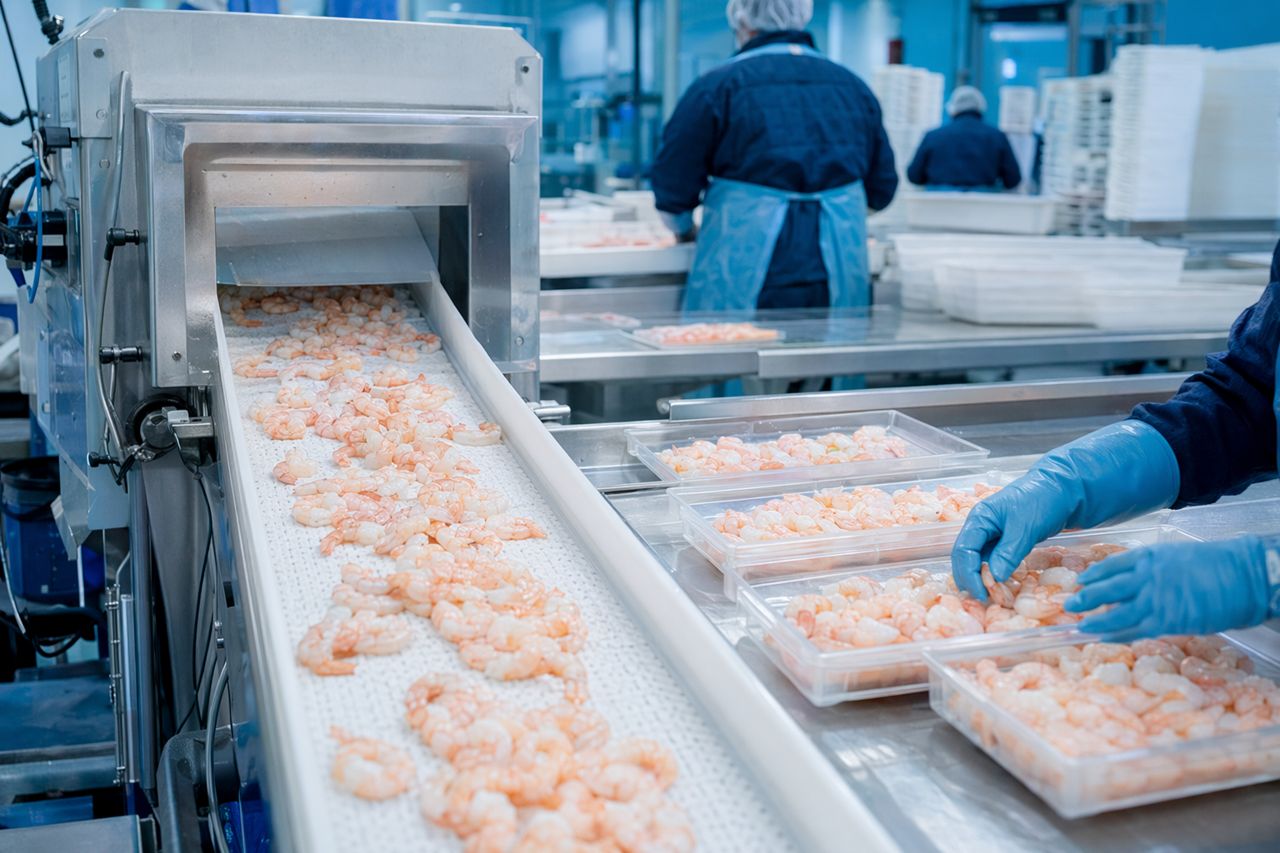
- Smoother flow into grading, packing, and freezing
For plants under labor pressure, this matters. A predictable shell-release step can reduce the amount of skilled manual correction required to keep the line on target.
What to review before changing the peeling process
Before adjusting chemistry, a plant should map the actual line behavior.
Review these points with production, QA, and maintenance:
- Incoming shrimp profile — species, size spread, shell condition, seasonality, and supplier variability.
- Cold-chain handling — product temperature stability, staging time, brine circulation, and transfer delays.
- Peeler performance — speed settings, roller condition, water flow, cleanout frequency, and damage rate.
- Labor allocation — inspection staffing, hand correction, shift changeover, and bottleneck points.
- Finished product metrics — peeled yield, defects, grade recovery, rework, and pack-out consistency.
This creates a practical baseline. From there, enzyme-assisted peeling can be evaluated against the plant’s real production priorities rather than a generic process assumption.
Why procurement should involve operations early
Choosing an enzyme supplier is not only a purchasing decision. The product must fit the plant’s equipment, seafood species, handling conditions, and production targets.
Operations should be involved because they know where the line actually slows down. QA should be involved because texture, appearance, and product integrity must stay within customer requirements. Maintenance should be involved because machine settings and downtime patterns often reveal the real cost of poor shell-release.
The strongest result comes when procurement, production, QA, and maintenance evaluate the process together.
Where Shellshift Marine fits
Shellshift Marine supplies enzyme solutions for shrimp peeling and seafood processing with a focus on plant-floor reliability. We help processors think through raw material behavior, preparation flow, peel consistency, and downstream impact.
Our role is to support a cleaner, more predictable peeling step so your team can protect throughput, reduce manual correction, and improve finished product consistency.
Request a quote
If your shrimp peeling line is limited by shell-release, labor availability, mechanical damage, or inconsistent pack-out, request a quote through the on-site form. Share your species, raw material format, process flow, and main bottleneck, and the Shellshift Marine team will respond with a practical supply recommendation.