Shrimp Processor Buyer Guide: What Plant Managers Expect from Ingredient Vendors
Cold-chain shrimp processing is not a relaxed purchasing environment. A late ingredient shipment, unclear documentation, damaged packaging, or weak plant communication can slow peeling lines, create avoidable downtime, and put yield targets at risk.
For plant managers, procurement is not only about price. It is about whether a vendor can protect throughput, peel quality, temperature control, labor efficiency, and downstream consistency shift after shift.
Shellshift Marine supports processors that need an enzyme supplier for shrimp peeling and seafood processing with technical documentation, cold-room-ready packaging, production-aware communication, and quote support aligned to real plant conditions.
What plant managers need from ingredient vendors
A seafood ingredient vendor must fit the operating rhythm of the plant. Shrimp processors are balancing raw material variability, cold-chain discipline, labor availability, mechanical peeling settings, inspection standards, and shipping windows.
The right vendor helps reduce friction in four areas:
- Documentation that quality teams can review quickly
- Packaging that works in wet, cold, high-throughput production areas
- Delivery planning that matches processing schedules
- Communication that connects procurement, QA, sanitation, and production
When those basics are handled well, ingredient approval becomes faster and plant trials become more useful.
Documentation should be complete before the first trial
A processor should not have to chase basic paperwork after a sample arrives. Documentation gaps delay internal approval and create unnecessary back-and-forth between procurement, QA, and production.
Ask vendors for a clear documentation pack
A serious ingredient vendor should be prepared to provide:
- Product specification sheet
- Safety data sheet
- Ingredient declaration support
- Allergen and handling statements when applicable
- Country of origin and traceability information
- Lot identification format
- Storage and shelf-life guidance
- Recommended use conditions for processing review
- Certificate of analysis or lot release documentation, without requiring the plant to interpret lab procedures
The goal is not paperwork for its own sake. The goal is fast internal routing. QA should be able to assess fit, procurement should be able to qualify supply, and production should understand how the ingredient will be handled on the floor.
Packaging must survive the shrimp plant, not just the warehouse
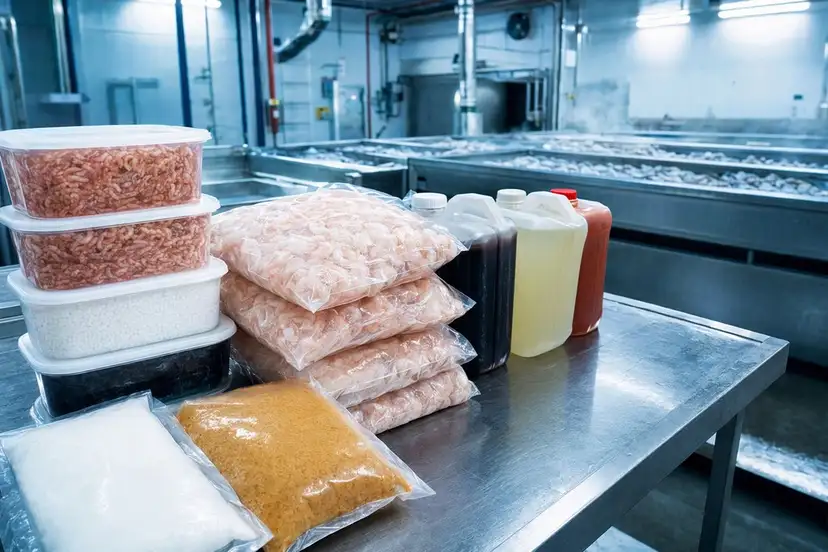
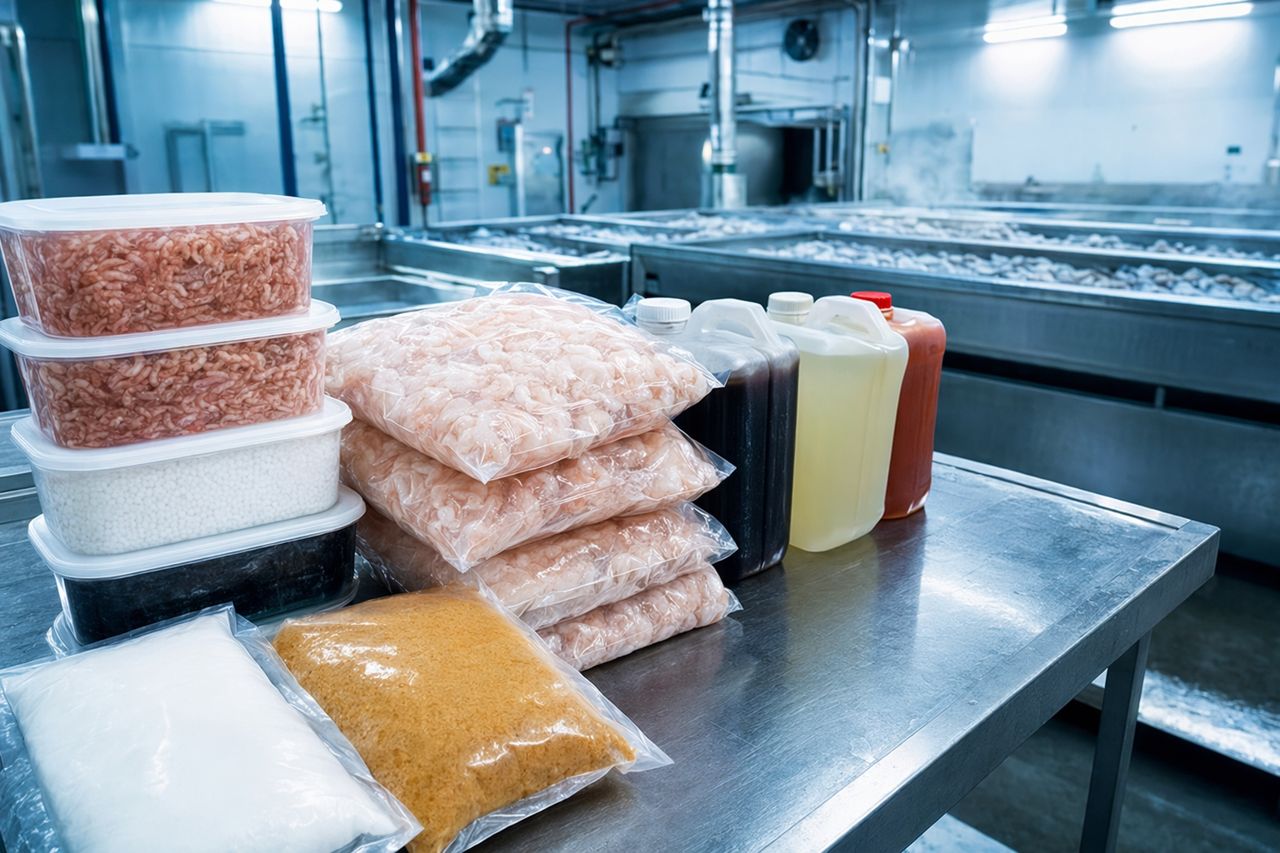
Seafood processing plants are wet, cold, and busy. Packaging that looks fine in a dry receiving area may fail once it is staged near brine systems, thawing areas, peeling lines, or sanitation traffic.
Packaging expectations for cold-chain processing
Plant managers should look for packaging that supports:
- Clean handling by gloved operators
- Clear lot visibility after cold-room staging
- Moisture-resistant labeling
- Secure closures to prevent contamination or waste
- Practical pack sizes for batch preparation
- Pallet patterns that fit limited cold storage space
- Easy receiving checks without slowing dock activity
Good packaging reduces operator hesitation. It makes the material easier to identify, stage, open, reseal when appropriate, and move without disrupting production flow.
Delivery reliability protects processing windows
Shrimp processing schedules can change quickly based on raw material arrivals, thaw timing, customer commitments, and labor availability. Ingredient vendors must be reliable enough to support planned production and responsive enough to handle changes.
What reliable delivery looks like
Procurement teams should evaluate whether the vendor can provide:
- Realistic lead times
- Clear order cutoffs
- Shipment tracking
- Lot-level shipment confirmation
- Advance notice of delays
- Safety stock planning conversations
- Seasonal volume planning for peak demand
For a plant manager, the issue is simple: the ingredient needs to be available when the line is ready. A vendor that communicates early gives the plant more options. A vendor that stays silent creates downtime risk.
Plant communication must be practical and technical
Ingredient vendors should not speak only in brochure language. Shrimp processors need useful answers that connect to production variables: raw shrimp size, shell condition, brine handling, dwell time, temperature, mechanical peel settings, inspection outcomes, and rework levels.
Good vendor communication includes
- A clear point of contact for procurement and technical questions
- Fast response when a lot, shipment, or handling question comes up
- Trial planning support before material is used on the line
- Practical guidance for brine integration and process sequencing
- Follow-up after trial runs to review peel quality, damage, yield, and labor observations
- Documentation updates when product, packaging, or handling guidance changes
The best vendor conversations are specific. They focus on what the plant is trying to improve and what the line is actually doing.
Evaluating an enzyme supplier for shrimp peeling and seafood processing
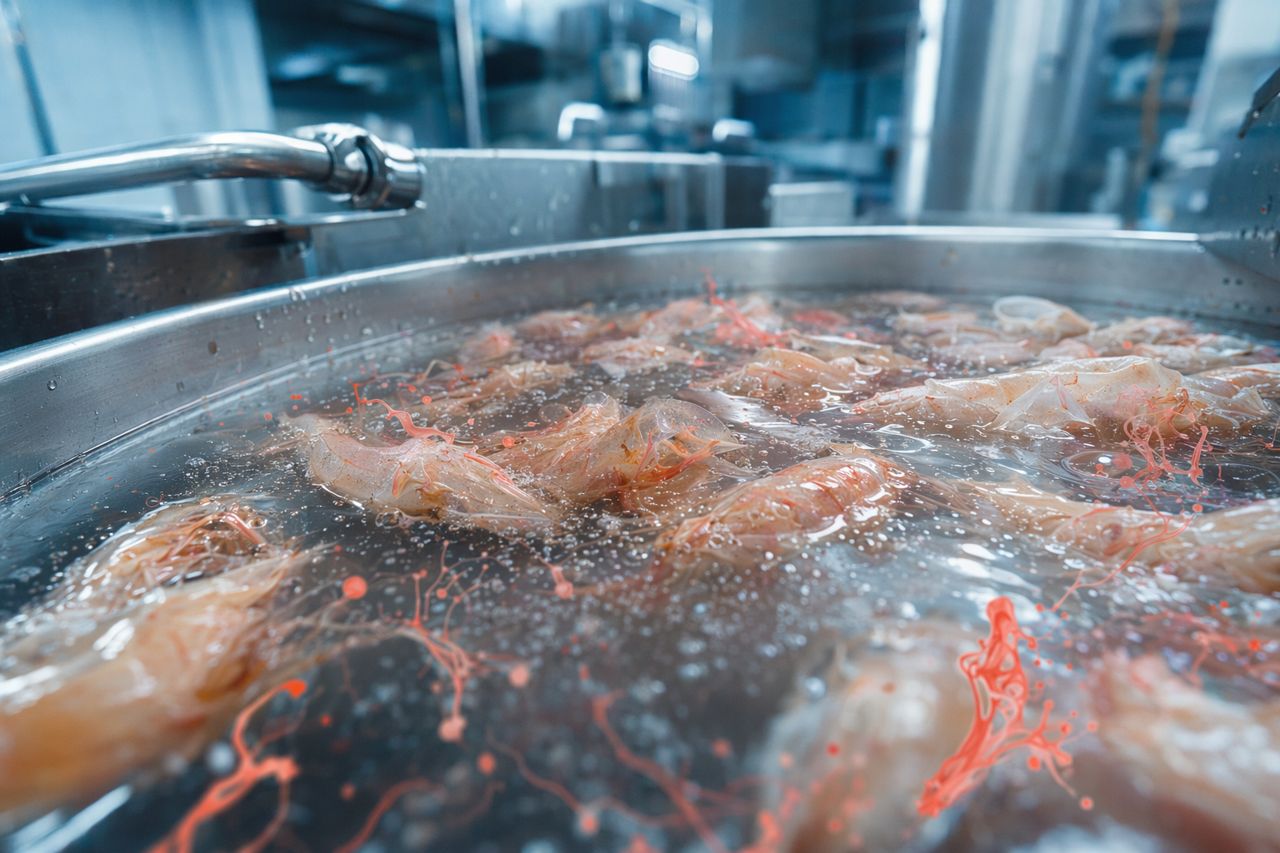
Enzyme-assisted shrimp peeling is a process decision, not just an ingredient purchase. The vendor should understand how enzyme application interacts with cold-chain conditions, shell release, texture protection, mechanical peeling, operator workload, and downstream seafood processing.
When reviewing an enzyme supplier for shrimp peeling and seafood processing, plant managers should ask:
- Can the supplier support both procurement review and plant trial planning?
- Does the documentation help QA evaluate the product efficiently?
- Is packaging suitable for cold, wet, high-volume seafood operations?
- Can the supplier discuss peel quality and yield without overselling?
- Will the supplier help compare trial outcomes against current processing conditions?
- Does the supplier understand that temperature control is part of process consistency?
- Can the supplier support recurring supply once the plant moves beyond trial quantities?
A useful supplier helps the plant make a controlled decision. They do not force the team to guess.
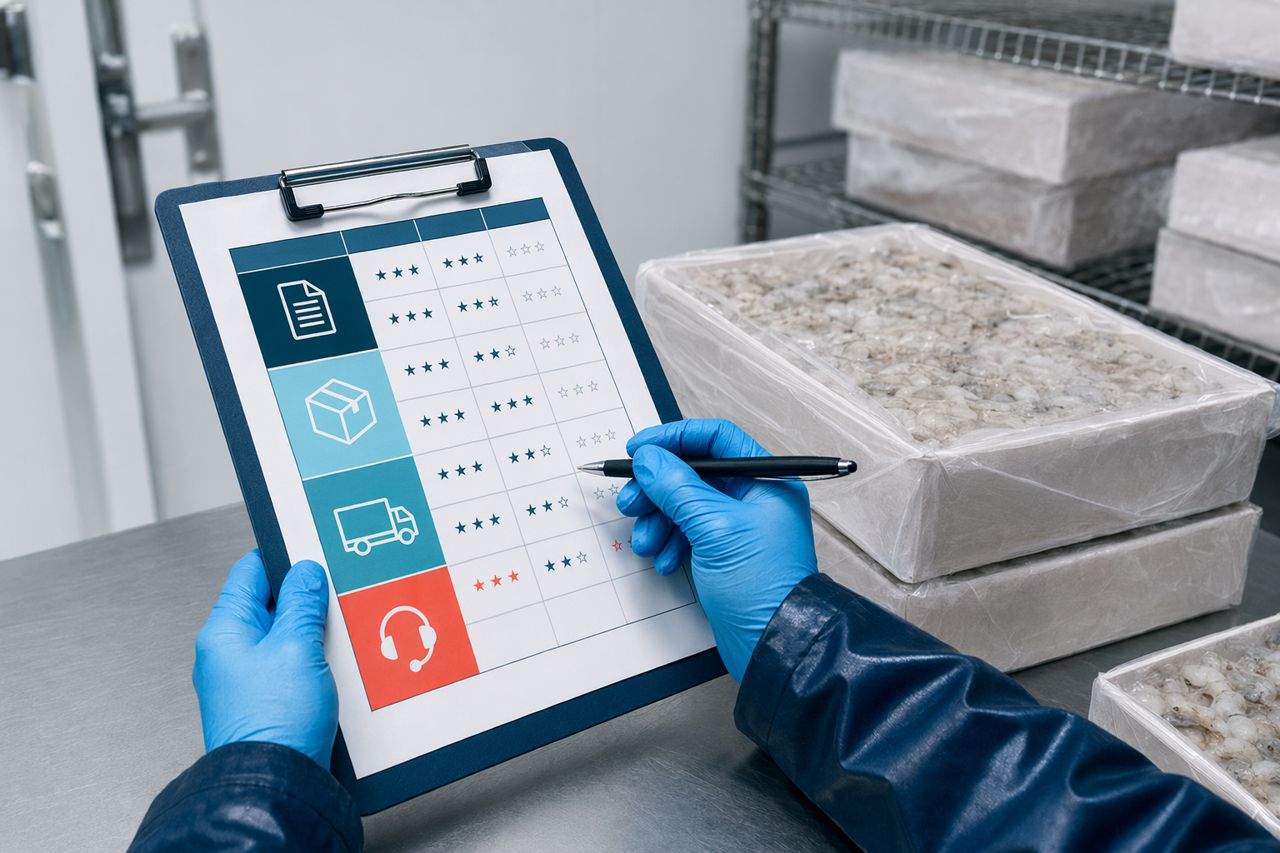
Vendor scorecard for shrimp processors
Use this simple scorecard when comparing ingredient vendors:
| Evaluation area |
What to confirm |
Why it matters |
| Documentation |
Complete spec, safety, traceability, and lot documents |
Speeds QA and procurement approval |
| Packaging |
Cold-room-ready labels, secure closures, practical pack sizes |
Reduces handling errors and waste |
| Delivery |
Confirmed lead times, tracking, delay alerts |
Protects production schedules |
| Technical support |
Process-aware answers and trial planning |
Improves trial quality and repeatability |
| Communication |
Clear contacts and timely updates |
Reduces downtime and uncertainty |
| Scalability |
Supply planning for routine and seasonal volume |
Supports long-term production needs |
Red flags during vendor qualification
Not every low-cost offer is plant-ready. Watch for signs that a vendor may create more work than value.
Common warning signs
- Vague documentation or inconsistent product names across documents
- Labels that are hard to read after cold storage
- No clear lot traceability process
- Unclear storage guidance
- Slow response to QA or procurement questions
- Unreliable shipment updates
- No understanding of shrimp peeling line conditions
- Trial recommendations that ignore temperature, dwell time, or mechanical handling
If a vendor cannot support the first approval step, they may struggle under production pressure.
What a better vendor relationship looks like
A stronger ingredient vendor relationship gives the plant more control. The plant knows what is arriving, how it is documented, how it should be stored, how it should be prepared, and who to contact if production conditions change.
For shrimp processors, that can support:
- More consistent peel outcomes
- Reduced mechanical damage
- Lower rework pressure
- Better labor utilization
- More predictable production planning
- Cleaner handoff between QA, procurement, and operations
- Stronger confidence before scale-up
The right supplier does not replace plant expertise. It supports it.
Request a quote from Shellshift Marine
If your plant is reviewing enzyme-assisted peeling, seafood brine processing, or ingredient vendor qualification, Shellshift Marine can help you evaluate fit with production realities in mind.
Use the on-site request a quote form to share your shrimp format, processing goals, packaging needs, destination region, and expected purchase timing. Our team will respond with the right next step for your plant.