Shrimp Peeling Yield Loss Before Peeling | Shellshift Marine
A technical guide from an enzyme supplier for shrimp peeling and seafood processing on cold-chain breaks, staging, thawing, handling pressure, and yield loss.
Request pricing A technical guide from an enzyme supplier for shrimp peeling and seafood processing on cold-chain breaks, staging, thawing, handling pressure, and yield loss.
Request pricingShrimp yield loss is often blamed on the peeler. On the plant floor, the loss usually begins earlier.
Before shrimp reach the peeling section, shell adhesion has already been affected by harvest condition, freezing history, thawing discipline, tote pressure, brine temperature, grade mix, and waiting time. The peeler can only work with the raw material condition it receives.
For cold-chain seafood processing plants, the highest-value improvement is not simply running the machine harder. It is controlling the pre-peel window so shrimp enter peeling with more consistent shell release, lower meat damage risk, and less variation between lots.
Shellshift Marine works as an enzyme supplier for shrimp peeling and seafood processing with a focus on practical line performance: steadier peel quality, higher saleable yield, less rework, and tighter cold-room control.
A peeling line is a downstream amplifier. Small upstream errors become visible as broken tails, torn surface meat, shell fragments, extra inspection labor, slowdowns, and uneven product recovery.
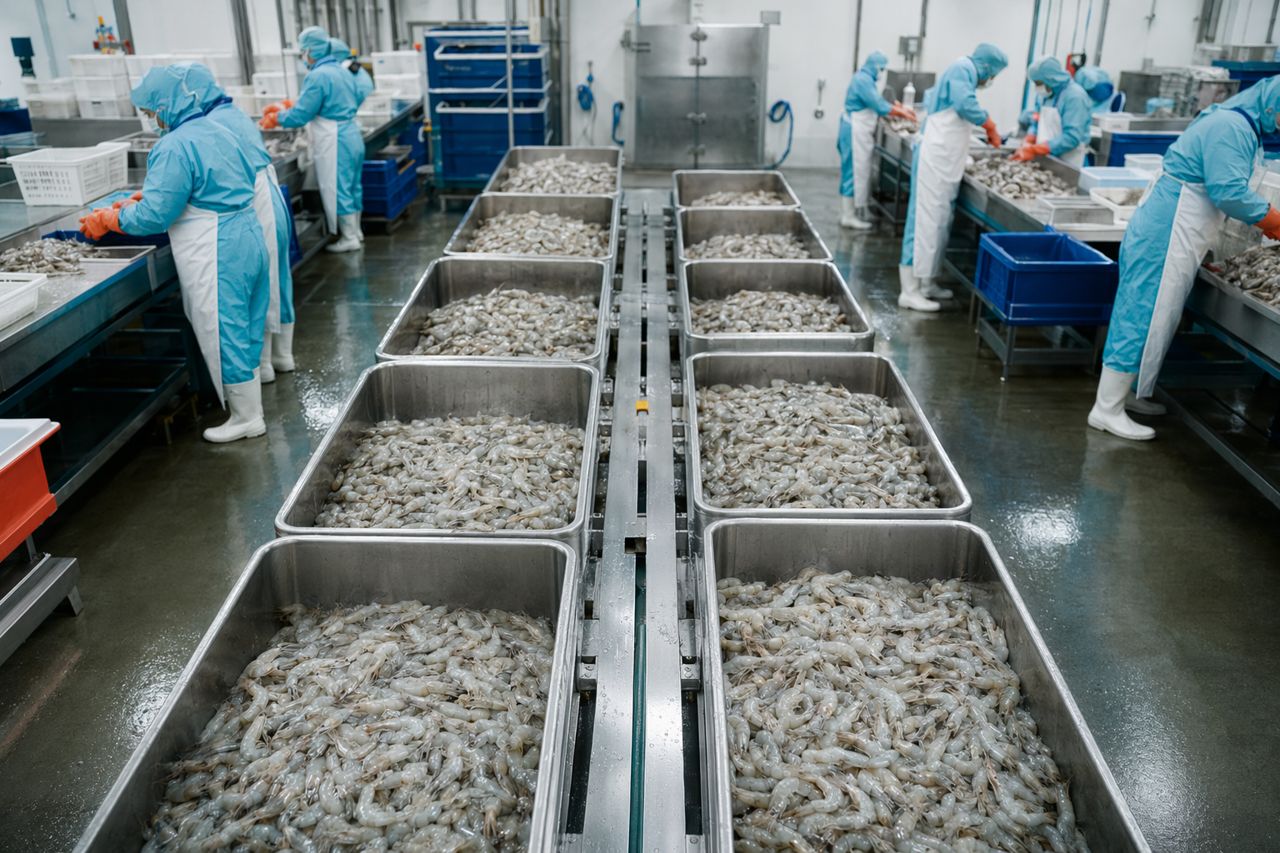
The pre-peel zone usually includes:
Each step can either preserve shell-release conditions or make peeling more aggressive than it needs to be.
Shrimp plants operate under temperature pressure for good reason. When cold-chain discipline slips, the product does not respond uniformly.
Common plant-floor issues include:
The impact is not only food safety risk. Temperature drift changes texture, shell-meat interaction, and mechanical tolerance. Some shrimp become more vulnerable to tearing. Others remain tight in shell and require extra peeling force.
That inconsistency is where yield disappears.
Plant managers should track temperature where the product actually sits, not only where the room sensor is located. Monitor tote depth, dwell time, brine temperature, and queue time before peeling. The goal is a repeatable pre-peel condition, not just a compliant room reading.
Two shrimp lots can share the same declared size and still behave differently on the line.
Yield loss can be driven by:
If mixed lots enter the same peel setting, the machine must be adjusted for the most difficult material. That often means over-processing the easier material.
Separate lots by behavior, not only by paperwork. If a lot consistently produces shell fragments, torn shoulders, or poor tail recovery, isolate it and adjust the pre-treatment profile before changing the entire line.
Mechanical peelers are designed around a target shrimp range. When grading is loose, small shrimp are exposed to conditions intended for larger shrimp, and larger shrimp may not receive enough shell-release support.
The result can look like equipment inconsistency:
In many cases, the root cause is not the peeler. It is grade spread entering the pre-peel stage.
Audit grade distribution just before treatment and just before peeling. If the spread widens during internal transfer, review tote handling, line routing, and rework recirculation.
Shrimp are not bulk gravel. High tote depth, excessive drop height, rough pumping, and hard turns can create physical damage before the product reaches the peeler.
Damage may appear later as:
Handling pressure is especially important when shrimp are partially thawed or transitioning through a tempering phase. The product may look stable, but tissue structure is more vulnerable.
Focus on the simple mechanical stress points:
Small changes here can protect more yield than a later machine adjustment.
Thawing is not just a step to make frozen shrimp processable. It sets the condition for shell release.
Poor thawing control creates a mixed feed:
A line cannot produce consistent peel quality from inconsistent thaw.
The plant should aim for even, repeatable conditioning across the whole lot. That means controlling water contact, temperature, agitation, dwell time, and drain time. The best target is not the fastest thaw. It is the most uniform thaw that protects texture and keeps the line supplied.
Staging is often treated as a buffer. In shrimp peeling, it is also a process condition.
If staging time changes hour by hour, the peeling line receives a moving target. The first bins may peel cleanly, while later bins from the same lot require more correction. Operators may respond by increasing mechanical intensity, which can reduce saleable yield.
A stable staging plan helps keep enzyme treatment, shell release, and mechanical peeling aligned.
Enzyme-assisted shrimp peeling is not a substitute for cold-chain control. It works best when the plant already manages time, temperature, grade, and flow.
Used correctly, an enzyme brine step can help create a more controlled shell-release window before the shrimp enter mechanical peeling. The commercial goal is straightforward:
Shellshift Marine supports processors by matching enzyme treatment recommendations to real plant conditions: species, size grade, temperature profile, hold time, brine design, line speed, and finished product target.
We do not approach peeling as a lab exercise. We approach it as a production problem with yield, labor, downtime, and quality targets attached.
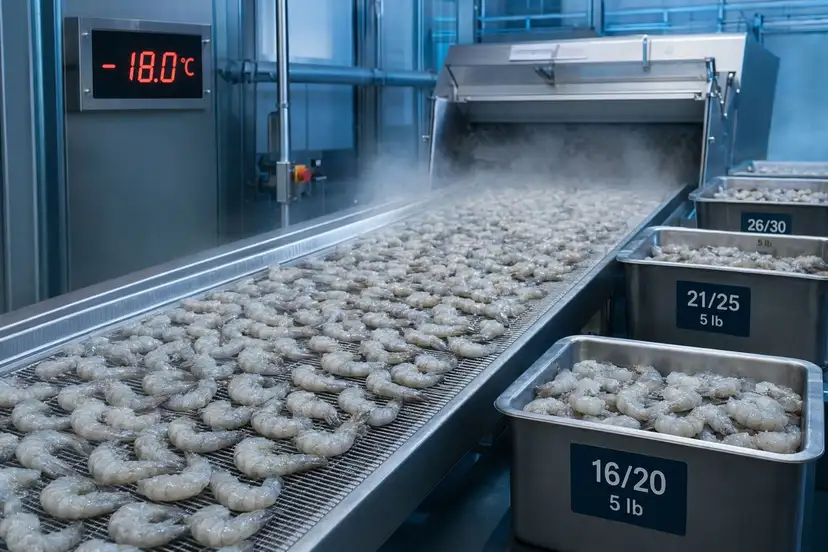
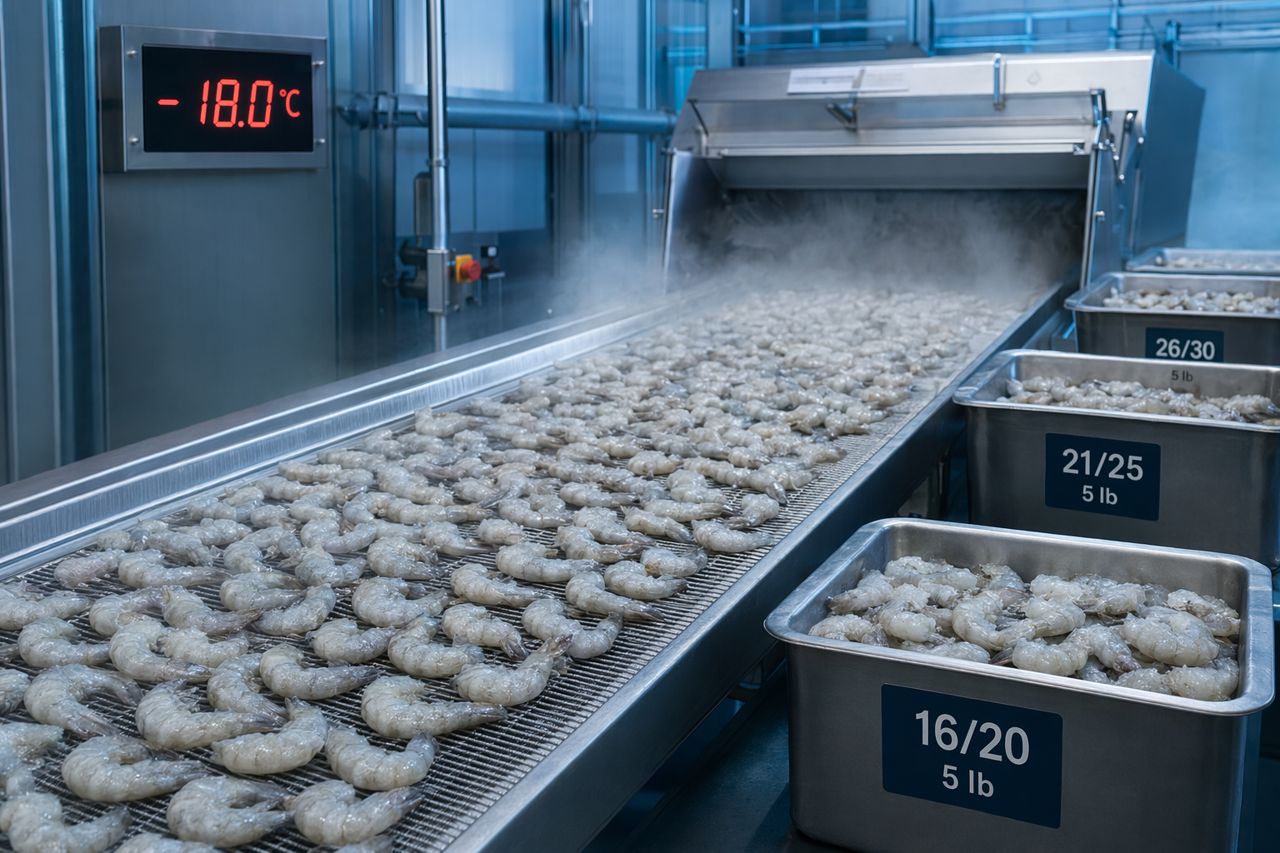
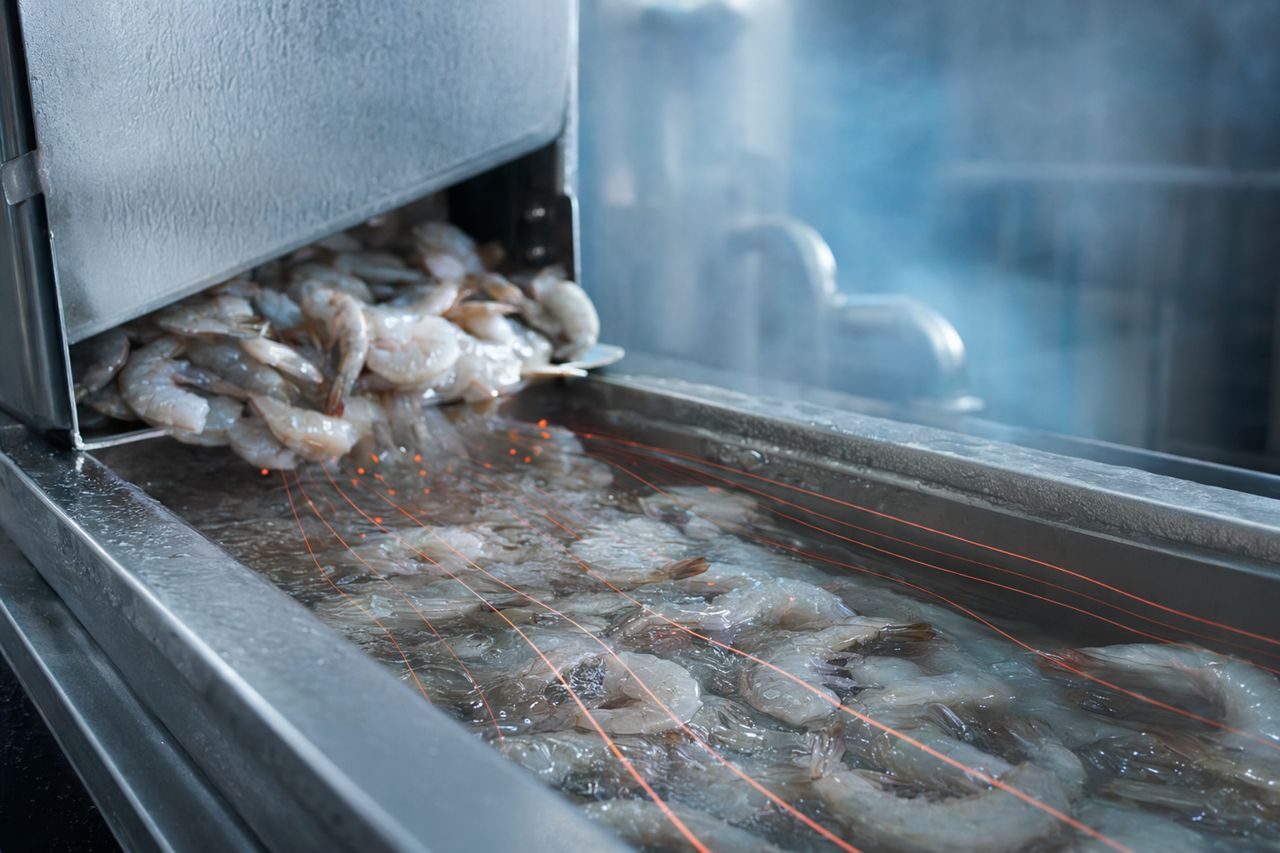
This page includes a faceless technical explainer video showing frozen shrimp moving through cold-room conveyors, temperature-controlled staging, enzyme brine contact, and shell-release flow before mechanical peeling.
The key message: if your yield loss is visible at the peeler, the cause may already be upstream.
Use this checklist before changing peeler settings:
The highest-yield plants do not rely on one correction point. They control the whole pre-peel path.
If your plant is seeing yield loss before the peeler starts, Shellshift Marine can help review the process conditions and quote an enzyme solution aligned to your production target.
Share your shrimp species, size range, temperature profile, thawing method, pre-peel hold time, and desired finished specification through the on-site request form.
Tell us your application and volume — we reply with pricing and lead time.