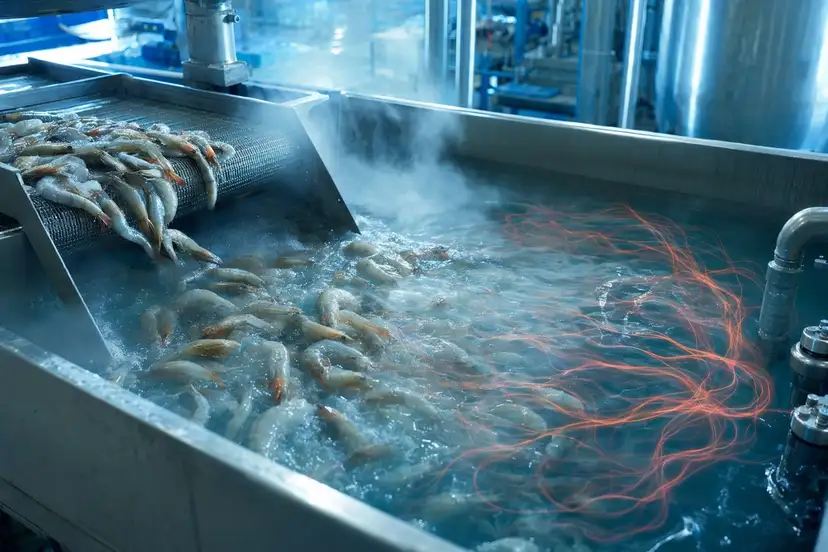
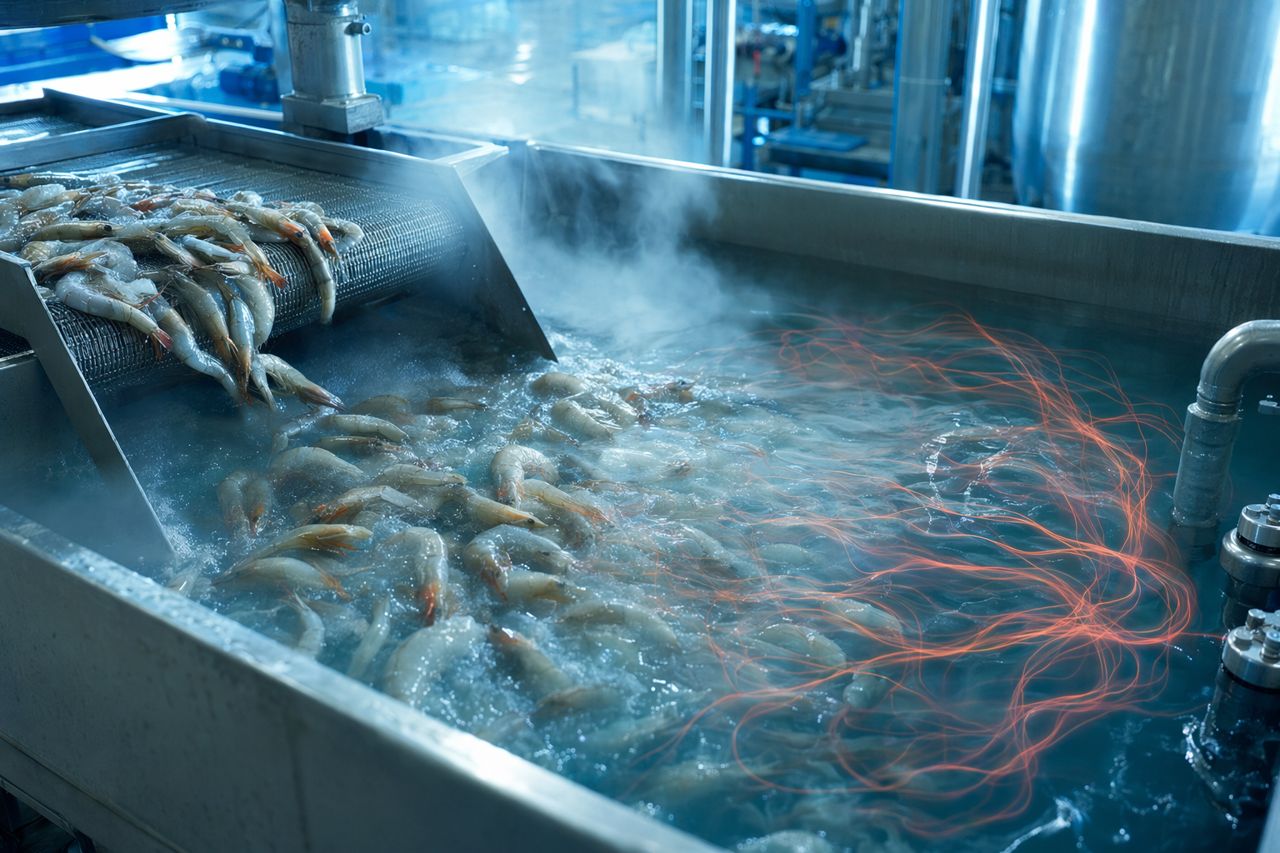
Water, Ice, and Brine Management in Frozen Shrimp Plants
In a frozen shrimp plant, water is not just a utility. It is a process variable that touches raw material receiving, thawing, washing, brining, enzyme-assisted peeling, chilling, glazing, sanitation, and freezing. If water, ice, and brine are not controlled tightly, the plant pays for it in soft texture, variable peel quality, excess giveaway, clogged filters, unstable temperatures, and avoidable downtime.
Shellshift Marine works with seafood processors that need predictable shell release, cleaner peeling, and consistent yield under cold-chain conditions. As an enzyme supplier for shrimp peeling and seafood processing, our role is to help plants integrate enzyme solutions into a controlled water and brine system, not treat enzymes as a stand-alone fix for an unstable line.
Why water control determines shrimp peeling performance
Shrimp peeling is sensitive to temperature, contact time, agitation, water quality, and carryover solids. When these variables drift, the process becomes harder to manage:
- Peelers need more mechanical pressure.
- Broken pieces and tail damage increase.
- Operators compensate with extra rinse or dwell time.
- Downstream chillers and freezers face inconsistent product temperature.
- Brine strength and cleanliness change across the shift.
- Labor is pulled into correction instead of throughput.
Enzyme-supported peeling performs best when the surrounding process is stable. Cold, clean, measured water systems help the plant keep the enzyme step focused on shell release rather than fighting temperature swings, organic load, or inconsistent brine conditions.
The three water zones that matter most
1. Incoming water and pretreatment
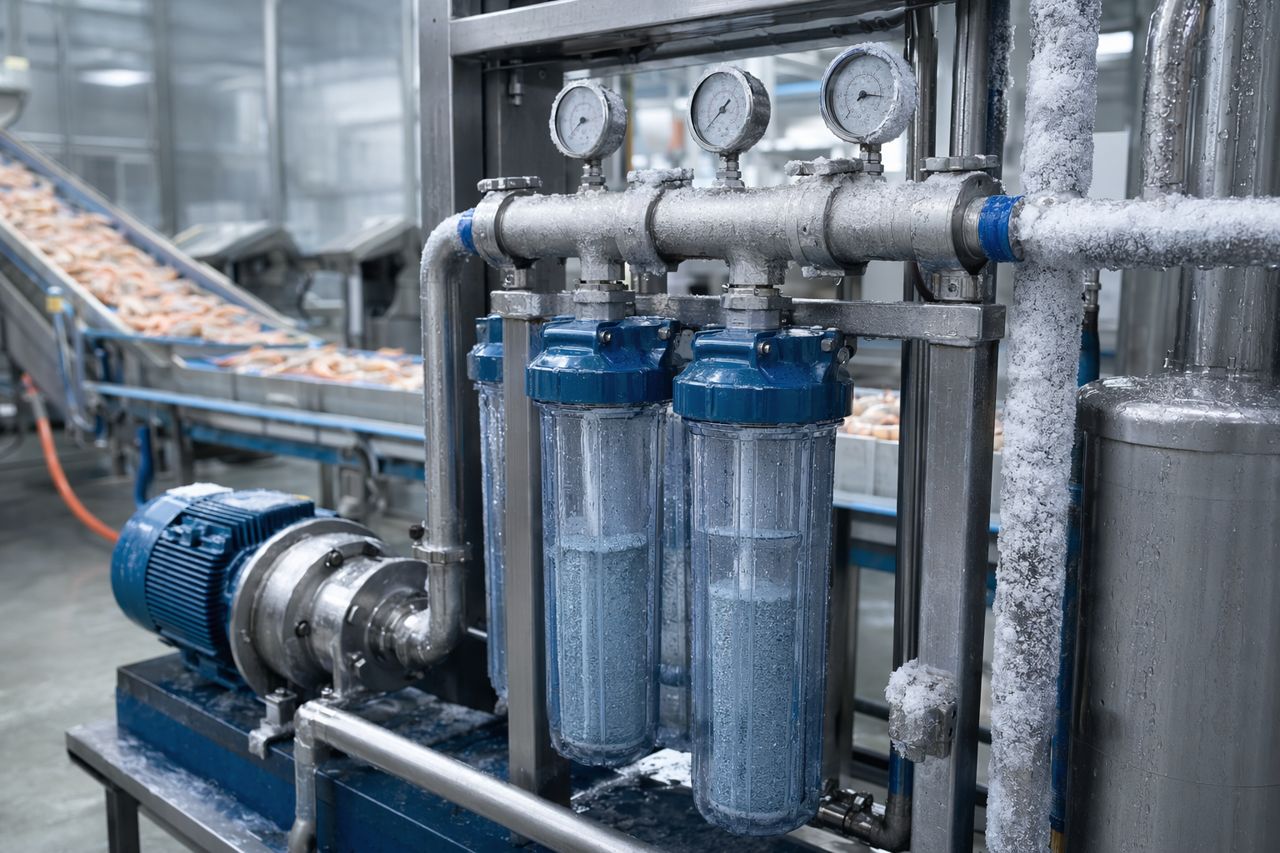
Incoming water quality affects every downstream touchpoint. Hardness, suspended solids, organic load, microbial pressure, and temperature variation can all influence process repeatability. For plants running high-volume shrimp lines, pretreatment and filtration should be evaluated as production tools, not just compliance equipment.
Plant managers should review:
- Inlet water temperature by shift and season
- Sediment load and filter change frequency
- Hardness and mineral scaling risk
- Chlorination or approved treatment practices
- Storage tank turnover and cleanability
- Flow stability during peak production
A stable incoming water system reduces surprises before shrimp enters the peeling and chilling stages.
2. Process brine and enzyme contact water
The brine or process water used around peeling needs tighter control than many plants give it. Temperature drift, shell fragments, soluble protein, and dilution can change the way shrimp behaves through the line.
Key controls include:
- Brine temperature maintained within the plant’s validated range
- Consistent salinity or formulation where brine is used
- Defined enzyme addition point and mixing zone
- Adequate but controlled contact time
- Filtration to reduce shell fines and suspended solids
- Routine refresh or bleed-off strategy
- Separation between clean process water and high-load waste streams
Shellshift Marine enzyme programs are designed to fit into these controlled conditions. The objective is not to flood the line with more chemistry. The objective is to support shell release with a repeatable, measurable process window.
3. Ice, chilling, and post-peel temperature recovery
Ice is a production asset when it is clean, consistent, and available where the process needs it. It becomes a hidden cost when it is poorly stored, contaminated with debris, or used to correct upstream temperature problems that should have been prevented.
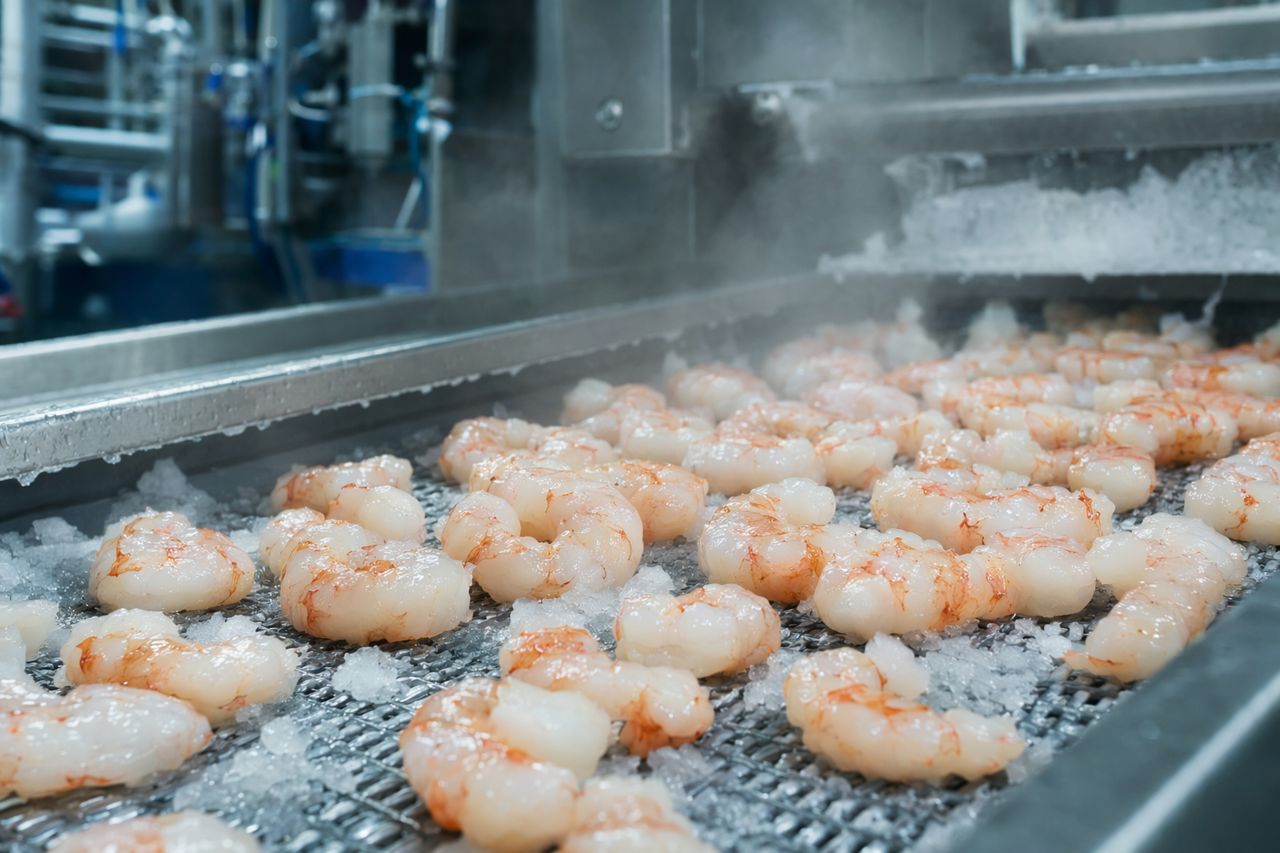
Post-peel shrimp needs rapid temperature recovery to protect texture and maintain cold-chain integrity. If the peeling step runs warm or uneven, the chilling system must work harder, and product variation increases before freezing.
Plants should inspect:
- Ice maker capacity versus peak line demand
- Ice storage hygiene and meltwater drainage
- Distribution points across receiving, staging, and post-peel handling
- Chiller load during full production
- Product temperature at defined checkpoints
- Delays between peeling, chilling, glazing, and freezing
How poor brine management shows up on the floor
Water and brine problems rarely appear as one clean failure. They show up as operational noise:
- Operators increase manual trimming or rework.
- Peelers are adjusted repeatedly during the shift.
- Yield reports vary by lot without a clear cause.
- Product temperature is inconsistent entering the freezer.
- Filters blind faster than expected.
- Pump strainers collect shell fines and soft tissue.
- Brine tanks develop foam, odor, or visible load.
- More water is used to chase cleanliness after the fact.
These symptoms should trigger a process review. In many cases, the enzyme step, mechanical peeling, filtration, water refresh, and chilling system need to be assessed together.
Practical control points for frozen shrimp processors
A plant-floor brine management plan does not need to be complicated. It does need to be consistent.
Recommended checks by operating area
| Area |
What to monitor |
Why it matters |
| Receiving and thawing |
Product temperature, water temperature, dwell time |
Prevents uneven softening before peeling |
| Enzyme contact zone |
Temperature, mixing, contact time, product flow rate |
Supports repeatable shell release |
| Brine tank |
Salinity or formulation, solids load, refresh rate |
Reduces drift across the shift |
| Filtration |
Pressure change, screen condition, shell fines |
Protects pumps, nozzles, and downstream equipment |
| Post-peel chilling |
Product temperature, ice availability, chiller load |
Maintains texture and cold-chain control |
| Freezer infeed |
Product temperature and surface water |
Improves freezing consistency and glazing control |
Where equipment partners fit
Water, ice, and brine control is a shared system. Strong results often come from aligning several plant partners around the same operating window.
Relevant support may include:
- Water treatment and filtration suppliers for incoming water stability
- Chiller and heat-exchange partners for temperature control
- Pump and piping specialists for stable flow and sanitary design
- Measurement system providers for temperature, salinity, pressure, and flow visibility
- Shellshift Marine for enzyme-supported peeling integration and seafood process guidance
The best projects define the target process first, then match the equipment and enzyme program to that target.
Enzyme integration without losing cold-chain discipline
An enzyme solution should make the line easier to control, not create another variable. Shellshift Marine focuses on practical implementation points:
- Where the enzyme is introduced
- How it disperses in cold process water or brine
- How long shrimp remains in the contact zone
- How temperature is held during production
- How the plant verifies peel quality and yield
- How rinsing, chilling, and freezing are sequenced afterward
For plant managers, the business value is straightforward: reduce unnecessary mechanical damage, stabilize peel results, support higher usable yield, and limit corrective labor.
A simple audit before changing the line
Before making major adjustments, walk the process with production, maintenance, QA, sanitation, and refrigeration leads. Look for the control gaps that create avoidable variation.
Use this checklist:
- Map every water, ice, and brine contact point from receiving to freezer infeed.
- Record product temperature at the same locations during different production loads.
- Check filter and strainer conditions before, during, and after peak throughput.
- Confirm whether brine refresh practices are documented or operator-dependent.
- Compare peel quality at the start, middle, and end of the shift.
- Review downtime linked to pumps, plugged screens, chiller overload, or sanitation delays.
- Identify where enzyme introduction could be controlled more precisely.
A clean process map usually reveals the highest-return improvements first.
The Shellshift Marine view
Frozen shrimp processing depends on cold, clean, repeatable movement. Water and brine are the carriers of that control. When they are managed correctly, enzyme-assisted peeling can operate inside a tighter window, with less mechanical stress and more predictable output.
Shellshift Marine supports plants that want to improve shrimp peeling without sacrificing temperature control, throughput, or downstream seafood processing flow.
Request a quote
Planning a shrimp peeling or seafood processing review? Share your plant conditions, target throughput, and current bottlenecks through the on-site request a quote form. Shellshift Marine will help identify the right enzyme approach for your water, ice, and brine system.