Protease for Shrimp Processing | Shellshift Marine
Shellshift Marine supplies protease solutions for shrimp peeling support, residue management, texture control, and cold-chain seafood line consistency.
Request pricing Shellshift Marine supplies protease solutions for shrimp peeling support, residue management, texture control, and cold-chain seafood line consistency.
Request pricingShellshift Marine supports cold-chain seafood plants that need cleaner shell release, steadier peel quality, and tighter control across shrimp processing lines. As an enzyme supplier for shrimp peeling and seafood processing, we focus on practical plant outcomes: less rework, reduced mechanical damage, more consistent yield, and easier coordination between receiving, thawing, brining, peeling, washing, and packing.
A broad protease is often considered when shell attachment, membrane residue, or variable raw material condition slows the line. Used correctly, protease can help soften protein-linked interfaces around the shell without turning the process into a texture risk.
The goal is not aggressive chemical stripping. The goal is controlled release.
Protease can be evaluated as a support tool in several cold-chain seafood operations:
For plant managers, the value is operational: fewer interruptions, more predictable batches, and a tighter link between enzyme exposure and finished product quality.
A broad protease can act on multiple protein structures. That flexibility is useful in shrimp processing, but it also demands control. Shellshift Marine helps processors define a practical operating window based on raw material, peel method, temperature profile, contact time, and target finished texture.
Key control points include:
The best programs are not based on adding more enzyme. They are based on repeatable control.
Shellshift Marine protease programs are designed around measurable plant-floor improvements:
When shell release is more predictable, peeling stations and mechanical peelers can run with fewer slowdowns. Operators spend less time fighting tight shell attachment and more time moving product forward.
Controlled protease exposure can help reduce shell fragments, membrane cling, and rough handling. That supports cleaner appearance and less product damage before grading and pack-out.
Yield is lost through over-peeling, broken meat, excessive trimming, and rework. Protease support can help reduce mechanical stress when the process window is properly tuned.
Shrimp peeling is labor-sensitive. Better shell release can reduce manual correction, inspection burden, and rework loops, especially during raw material variability.
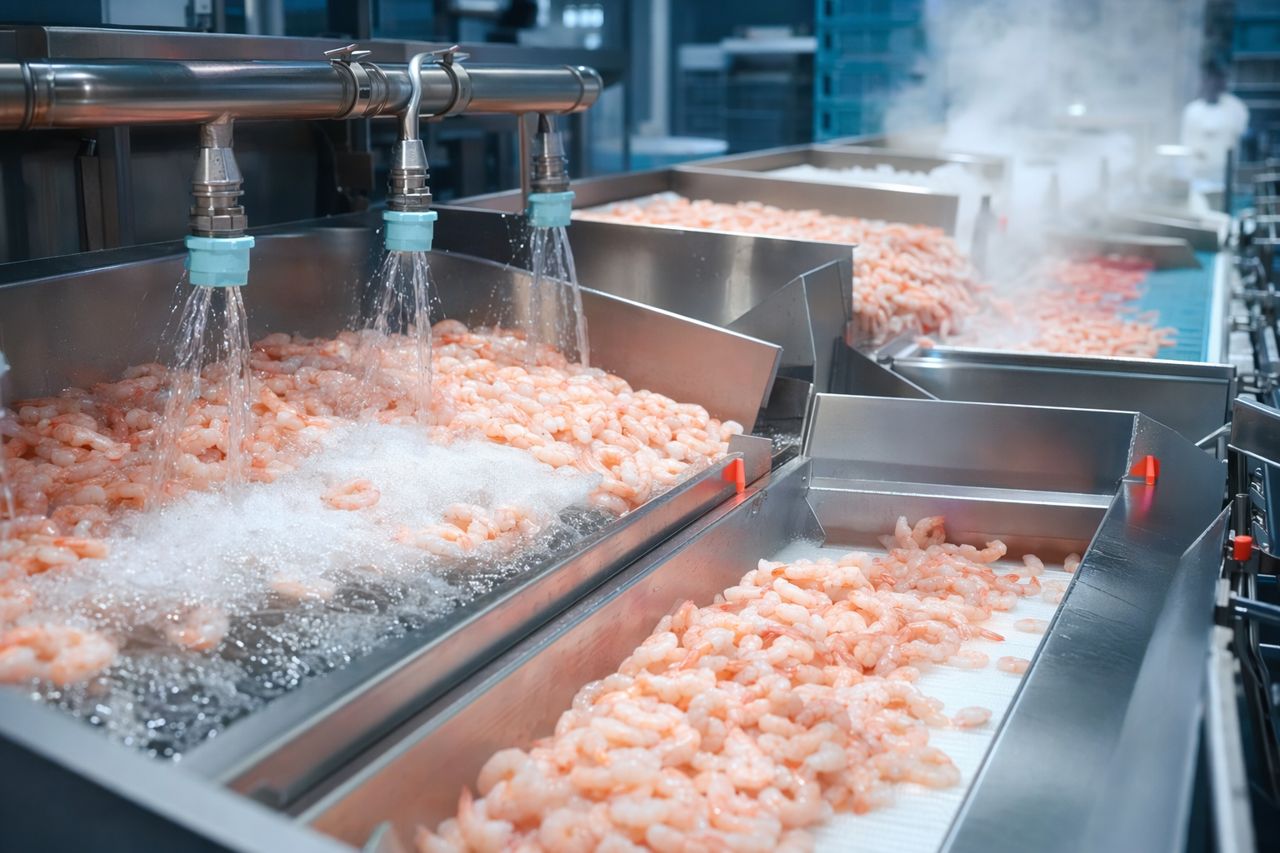
Inconsistent peeling performance often creates stoppages around peelers, conveyors, wash tanks, and inspection points. A controlled enzyme step can help smooth the flow between unit operations.
Shellshift Marine designs enzyme use around cold-room realities. The process must work with chilled product handling, stainless equipment, cleaning routines, and strict temperature discipline.
Not every protease belongs on a shrimp line. We evaluate fit by asking practical production questions:
This selection process helps avoid over-treatment and keeps the enzyme program aligned with throughput and yield goals.
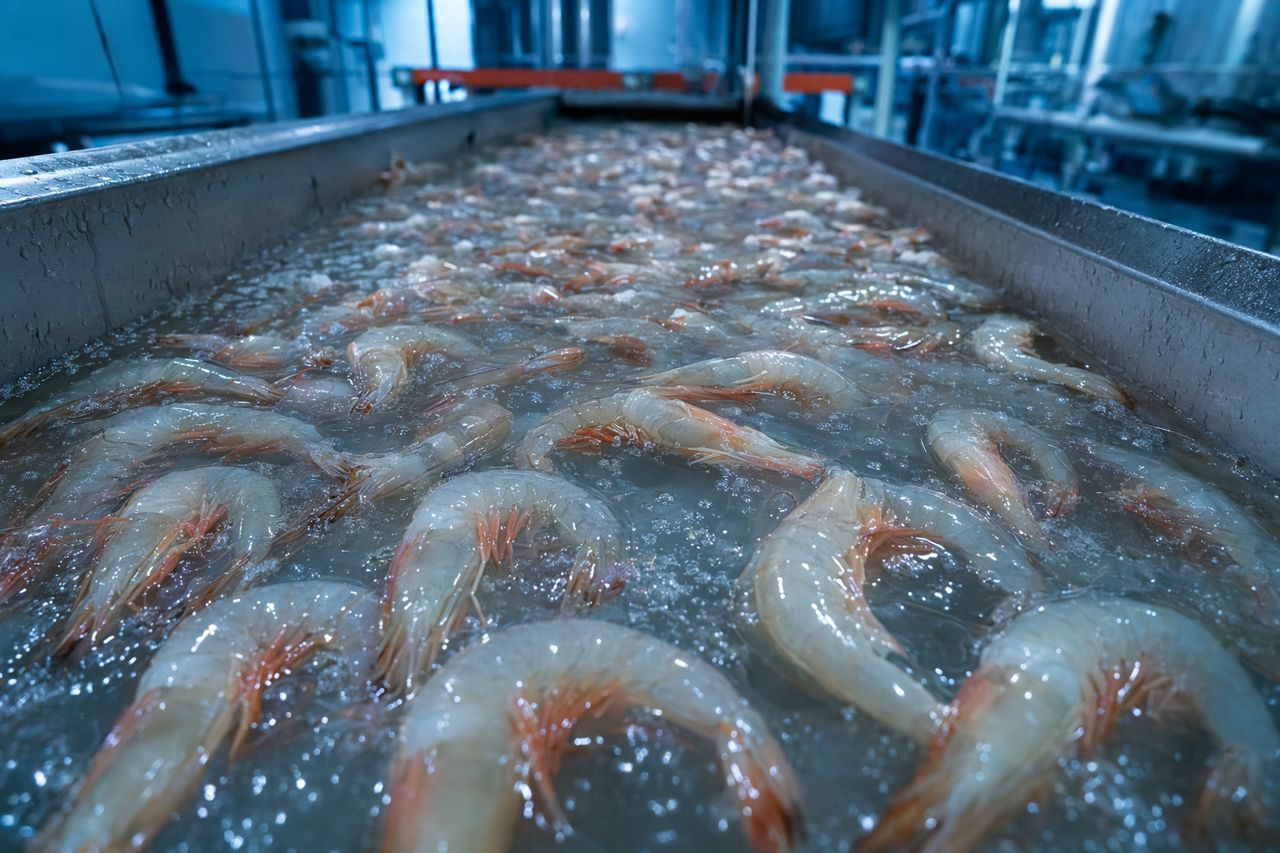
Protease can be evaluated in several controlled contact formats depending on plant layout:
Shellshift Marine does not recommend adding enzyme blindly to an existing tank. The correct integration point must support accurate dosing, uniform contact, temperature control, and reliable rinse-out.
Protease use must fit into your plant’s quality system. Shellshift Marine supports documentation for process review, ingredient handling, sanitation compatibility, and internal production trials.
Our technical approach emphasizes:
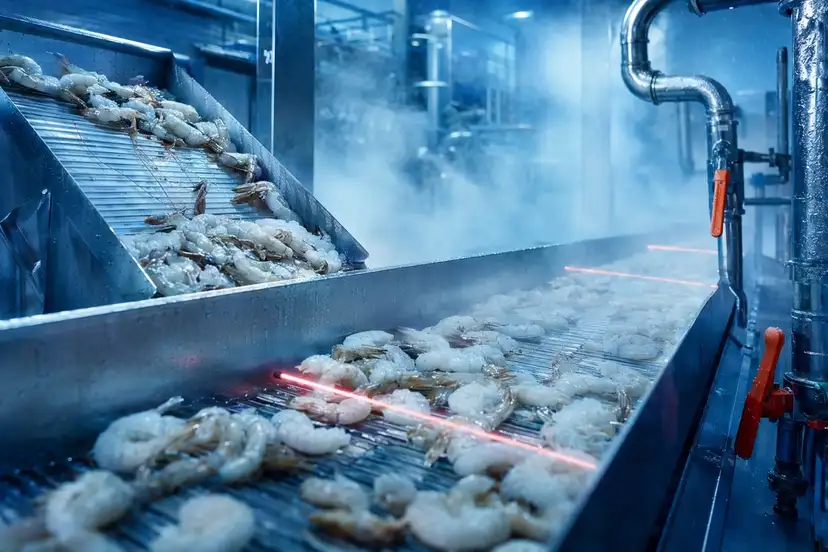
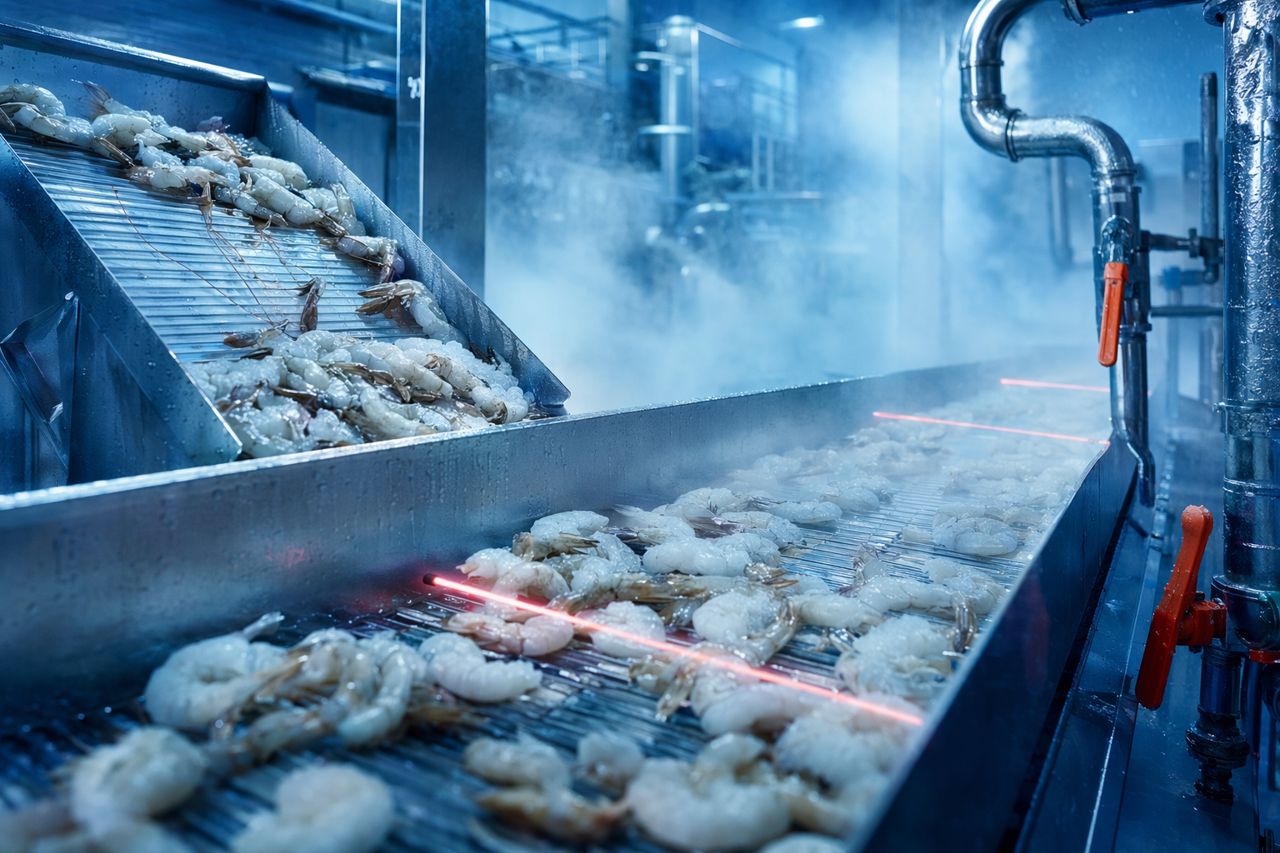
A one-minute faceless explainer video on this page shows how controlled protease exposure can support shell release, reduce mechanical damage, and stabilize downstream seafood processing flow. The visual style is cold-room stainless steel, blue vapor, chilled brine, and macro enzyme motion lines tracing the release zone between shell and meat.
Request a quote if your plant is seeing any of the following:
To recommend the right protease program, Shellshift Marine typically asks for:
If you are evaluating protease for shrimp peeling or broader seafood processing, contact Shellshift Marine for a plant-specific recommendation.
Request a quote through the on-site form and include your processing line type, shrimp format, and the problem you want to solve first.
Tell us your application and volume — we reply with pricing and lead time.